Define the load that will actually travel
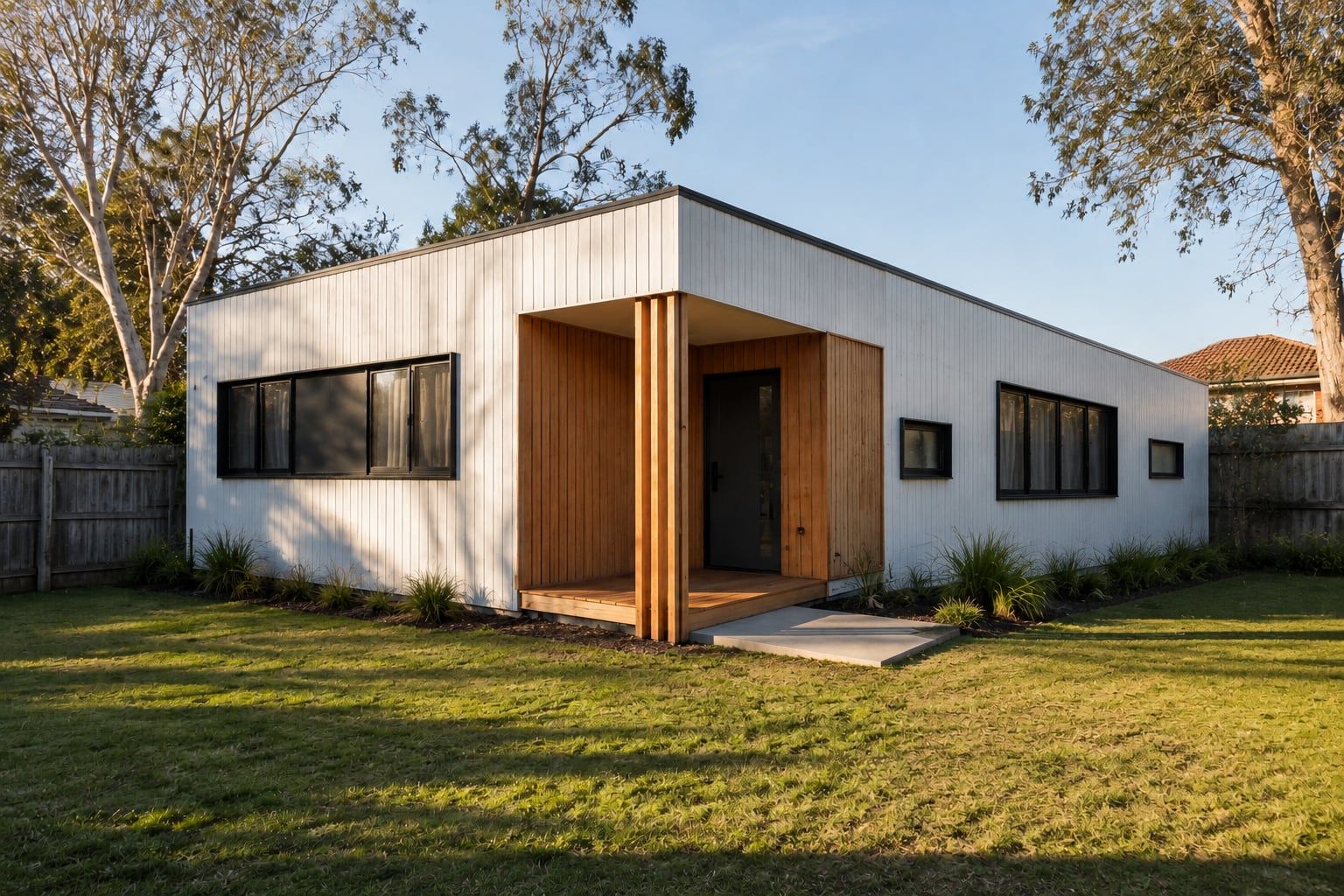
Provide module dimensions in transport condition, mass information, lifting points, packaging and the proposed vehicle combination. A render of the finished house may include a roof, canopy or cladding detail installed after delivery. Ask the manufacturer which components travel together and which are assembled on site. Do not treat product floor area as transport dimensions.
The last street can be the hardest part
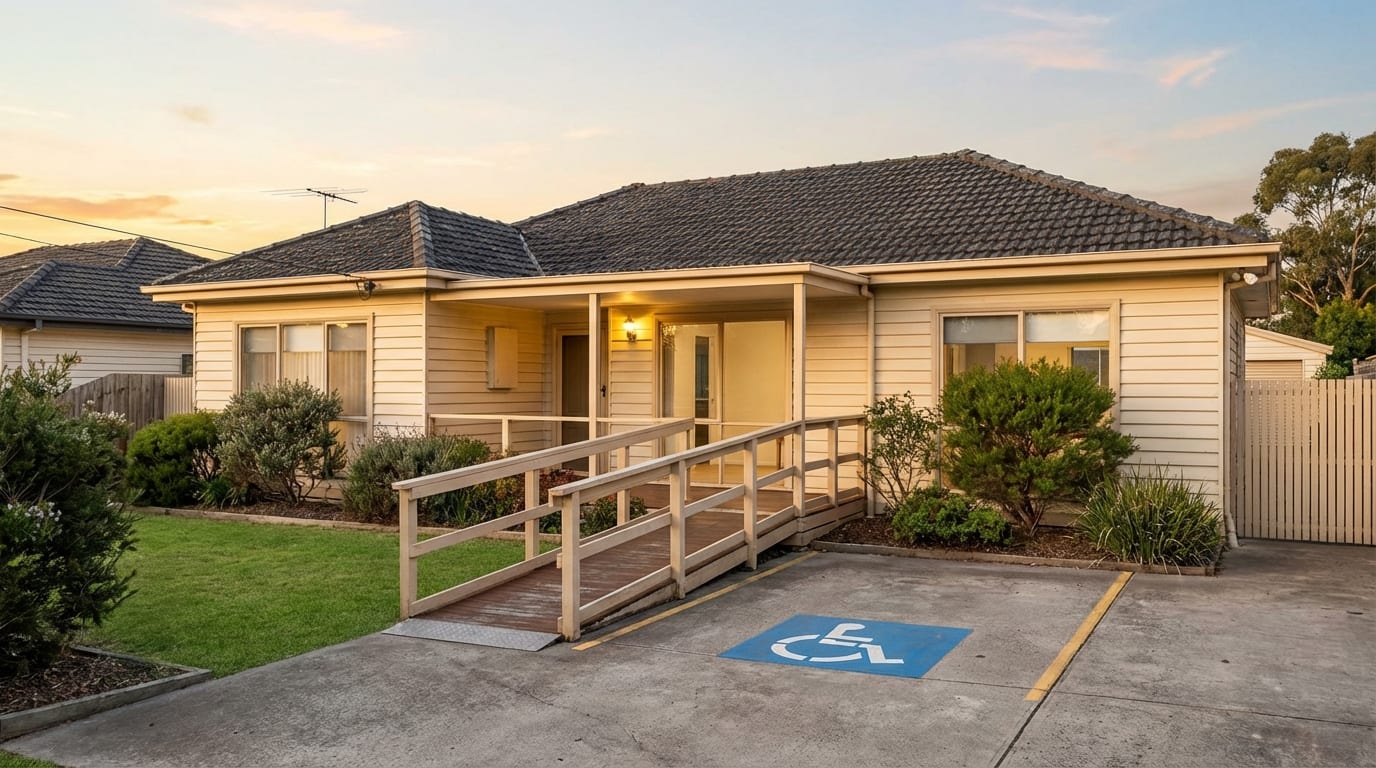
Review the approach road, turns, parking, entry geometry and the space needed to align the vehicle with the lift. The carrier should verify restrictions for the actual combination, including the relevant NHVR route conditions [8]. A vehicle reaching the suburb does not prove it can reach the landing position. Record the route version and required approvals rather than relying on a general claim of nationwide delivery.
“The register is the one reference a builder cannot hand you. Read it before you read the price.”
Give the lifting contractor a site evidence pack
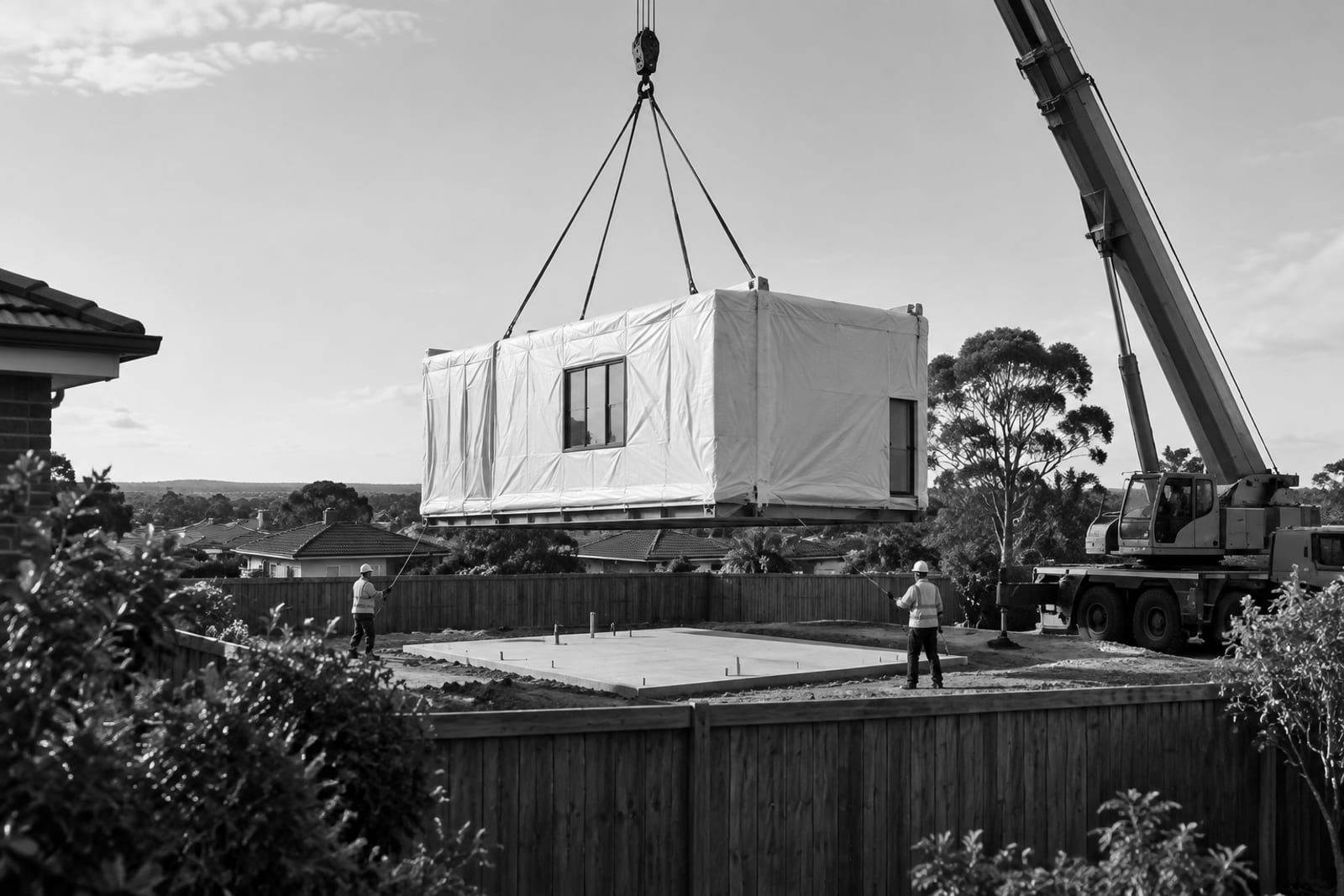
Supply survey information, proposed crane standing area, known ground and buried-service information, overhead-service locations and the intended landing position. The contractor determines the appropriate plant and controls under the site conditions [7]. The owner should not select a crane from a capacity label or direct a lift from a screenshot. Preserve the contractor’s written assumptions with the proposal.
Coordinate readiness before booking
Ask who confirms foundation completion, connection interfaces, access clearance, weather contingencies and the authority to release the load. A failed readiness check can leave a module on a truck while another trade completes essential work. The contract should identify storage, rebooking, protection and damage responsibilities; do not assume every participant has priced the same delay.
Keep neighbours and public land in the programme
Footpath occupation, road use, overhead assets and neighbouring access may need separate permissions or coordination. Identify the responsible authority and applicant for each issue before fixing a delivery date. Delivery is a construction operation, not proof the dwelling is ready to occupy. Follow with inspections and the handover evidence checklist.
Questions people ask
Does a wide side passage prove prefab is feasible?
No. It is one physical observation. The actual vehicle, load, turning path, lift position, ground and nearby hazards need professional assessment. A module may arrive by crane from another position rather than pass through the side passage.
Who checks transport permits?
The proposal should name the transport operator and the party arranging access. NHVR distinguishes vehicles and operations covered by notices from those needing permits [8]. Have the operator confirm the actual combination and route instead of assuming one rule covers every module.
Can I choose a crane from the module weight?
Weight alone is insufficient. Reach, configuration, ground, hazards and the lift arrangement affect the professional assessment. Give the lifting contractor the evidence pack and ask for its written proposal; do not direct the operation yourself.
Is factory completion the delivery date?
No. Factory readiness, transport readiness, site readiness and installation are separate milestones. The project programme should show their dependencies and the person authorised to release each stage. A forecast date should stay conditional on those checks.
What happens if the site is not ready?
The answer belongs in the agreed contract and delivery plan. Identify who arranges storage, protection and rebooking and how costs and delays are handled. Clarify this before shipping, when the parties still have practical options.
Can a delivered module be rented immediately?
Delivery does not establish permission to occupy or readiness for a tenancy. Confirm the required building documents and service completion with the surveyor, then the applicable rental or rooming house requirements with the responsible professionals [4,6].
References
- 1.Consumer Affairs Victoria — Building contracts — Checked 9 October 2026; the instrument or guidance applies only within its stated scope.
- 2.Consumer Affairs Victoria — Working with your building client — Checked 9 October 2026; the instrument or guidance applies only within its stated scope.
- 3.Building and Plumbing Commission — Appointing a building surveyor — Checked 9 October 2026; the instrument or guidance applies only within its stated scope.
- 4.Building and Plumbing Commission — Issuing an occupancy permit — Checked 9 October 2026; the instrument or guidance applies only within its stated scope.
- 5.Planning Victoria — Small second dwellings applicant guide — Checked 9 October 2026; the instrument or guidance applies only within its stated scope.
- 6.Consumer Affairs Victoria — Rooming house operator checklist — Checked 9 October 2026; the instrument or guidance applies only within its stated scope.
- 7.WorkSafe Victoria — Cranes and lifting equipment — Checked 9 October 2026; the instrument or guidance applies only within its stated scope.
- 8.National Heavy Vehicle Regulator — Do I need a permit? — Checked 9 October 2026; the instrument or guidance applies only within its stated scope.